 Liverpool5
 Manchester United5
 Chelsea3
 Everton3
 Manchester City3
 Arsenal2
 Blackburn Rovers2
 Newcastle United2
 Aston Villa1
 Bolton Wanderers1
 Brighton & Hove Albion1
 Charlton Athletic1
 Hull City1
 Ipswich Town1
 Leeds United1
 Nottingham Forest1
 Reading FC1
 Southampton1
 West Ham United1
 Wigan Athletic1
 Celtic3
 Rangers2
 Bayern Munich3
 Borussia Dortmund2
 1. FC Kaiserslautern1
 Bayer Leverkusen1
 Hertha BSC1
 TSV 1860 Monachium1
 VfL Wolfsburg1
 Inter Milan3
 AC Milan2
 Catania Calcio1
 Juventus1
 Perugia1
 Barcelona4
 Real Madrid4
 Valencia CF2
 Atletico Madrid1
 Celta Vigo1
 Getafe CF1
 Paris Saint-Germain2
 Olympique Marseille1
 Ajax1
 Benfica1
 Bohemian FC Dublin1
 Club Brugge1
 Feyenoord1
 Grasshoppers Zurich1
 Melbourne City FC1
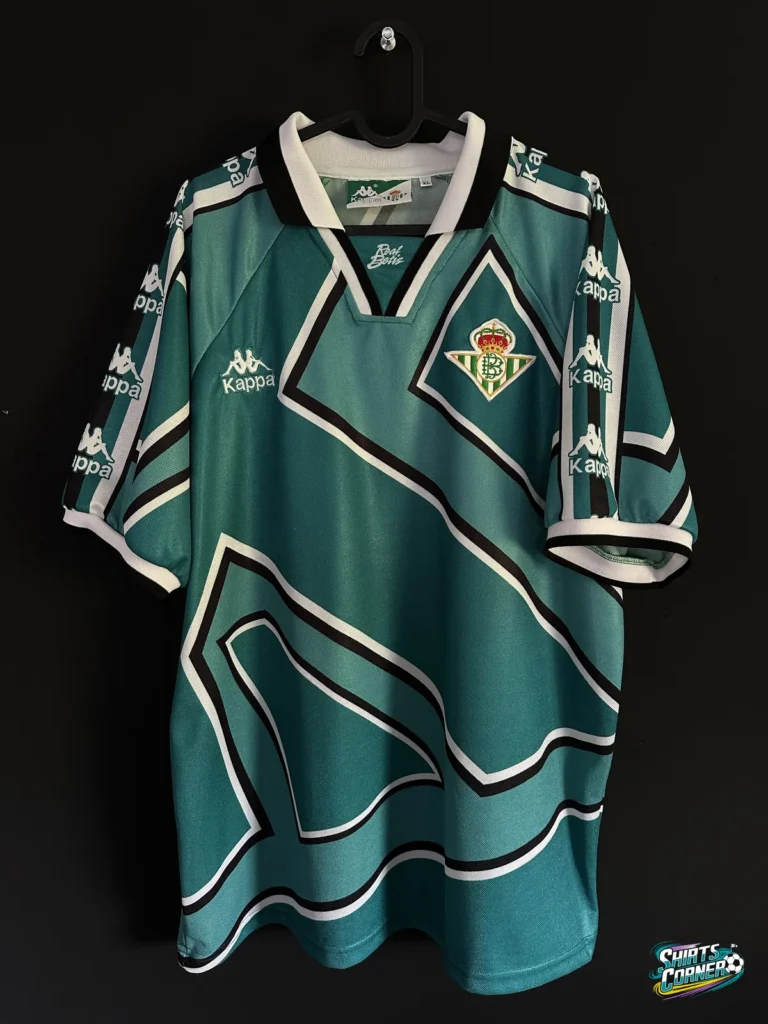
 Real Betis1
 Sporting CP1
 Swindon Town1
 VfB Stuttgart1
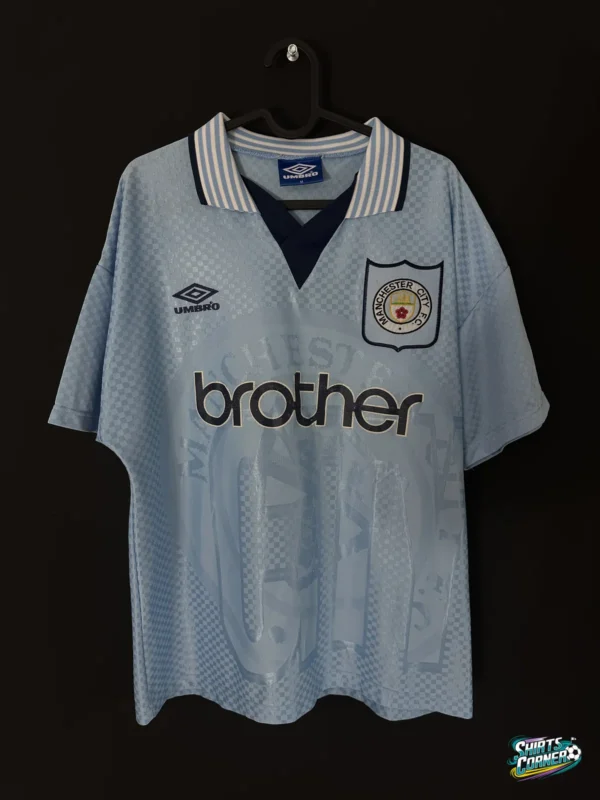 Manchester City 1996/97 Home Shirt Umbro429 zł
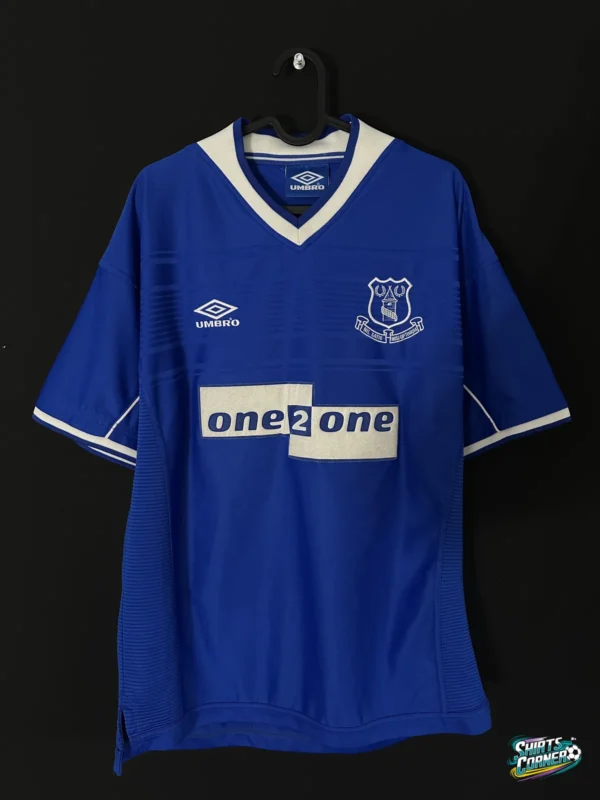 Everton FC 1999/2000 Home Shirt Umbro349 zł
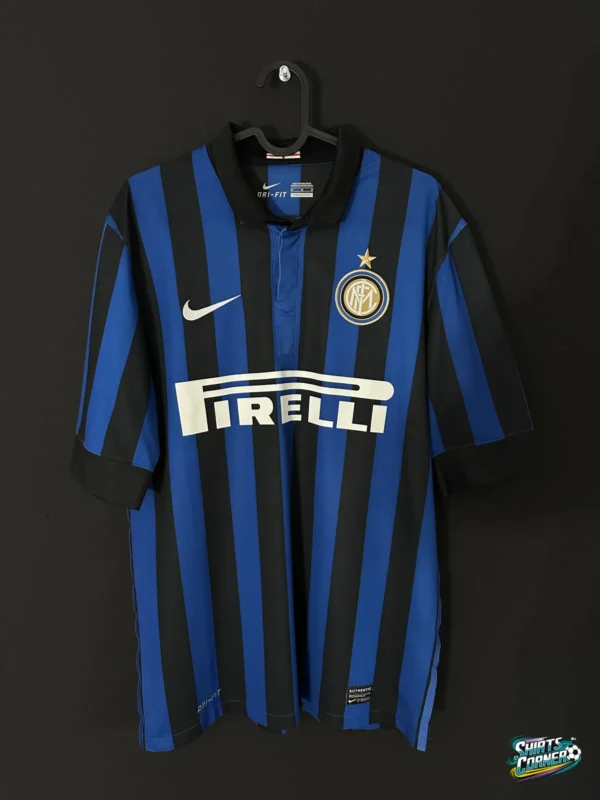 Inter Milan 2011/12 Home Shirt Nike319 zł
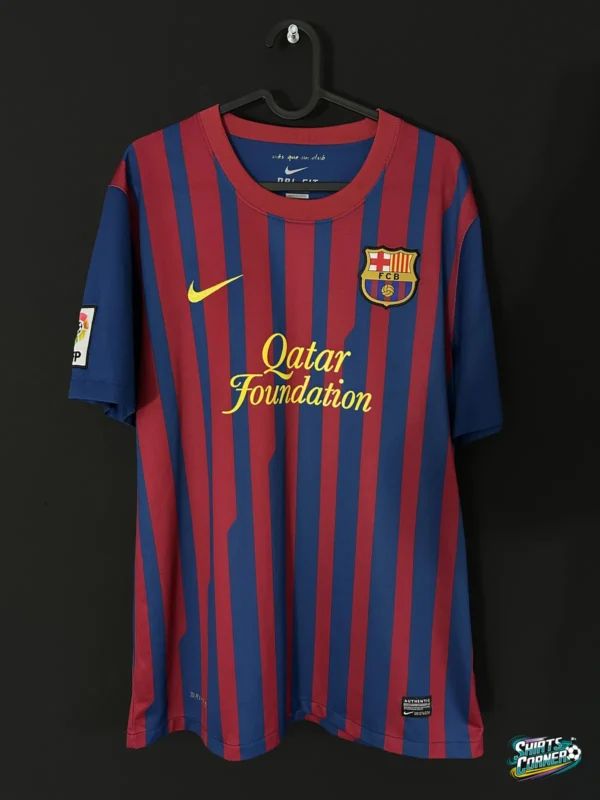 FC Barcelona 2011/12 Home Shirt Nike299 zł
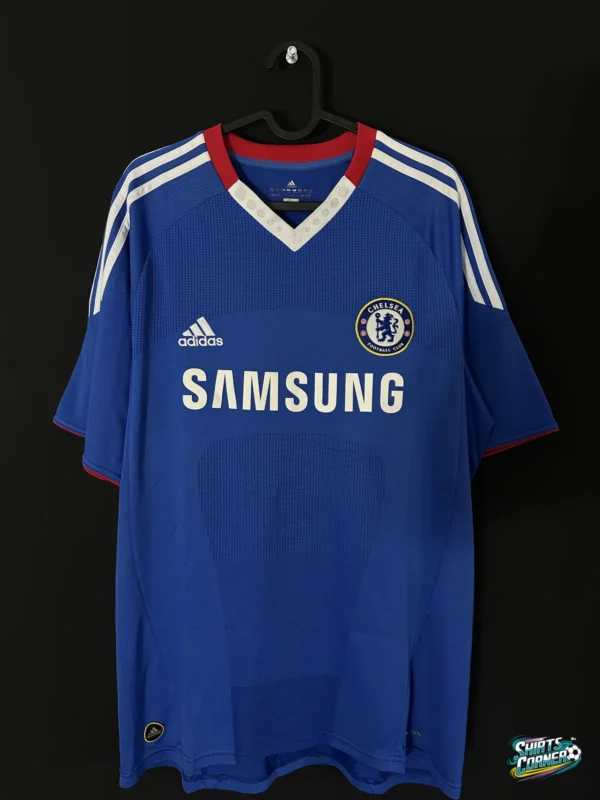 Chelsea FC 2010/11 Home Shirt adidas279 zł
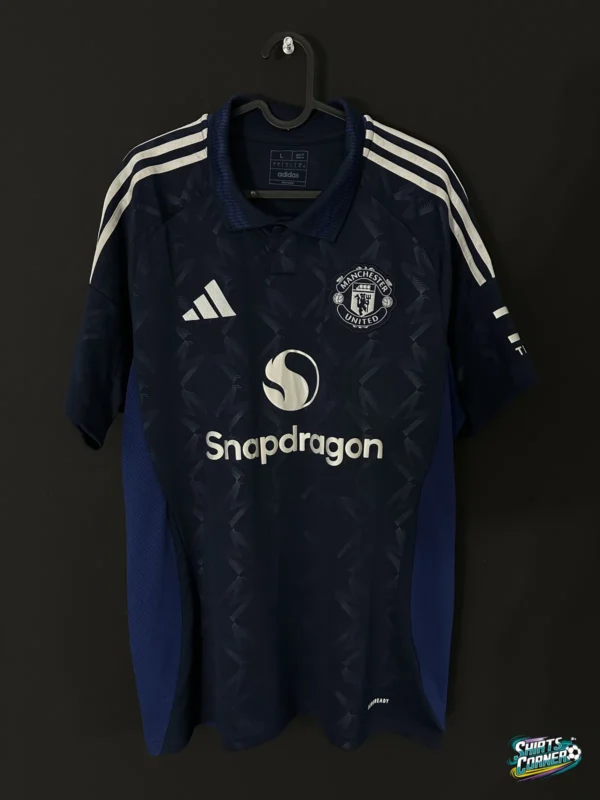 Manchester United 2024/25 Away Shirt adidas279 zł
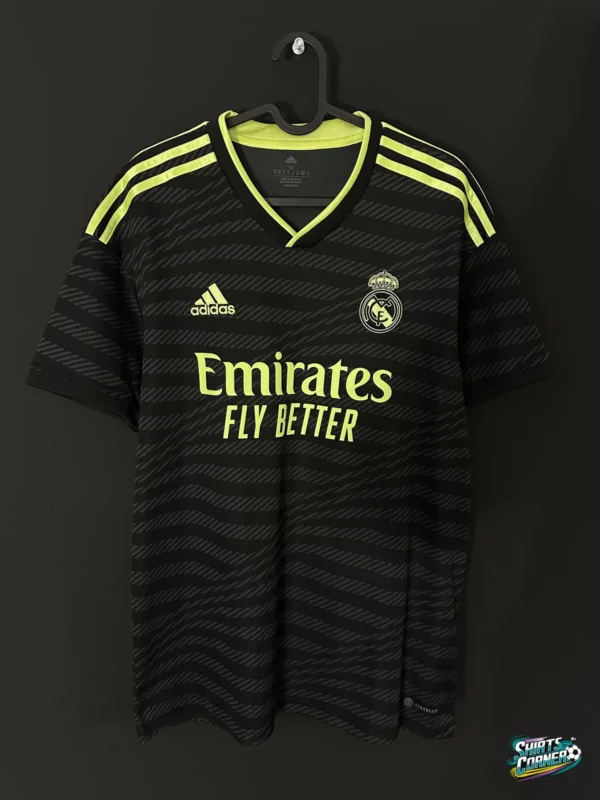 Real Madrid 2022/23 Third Shirt adidas279 zł
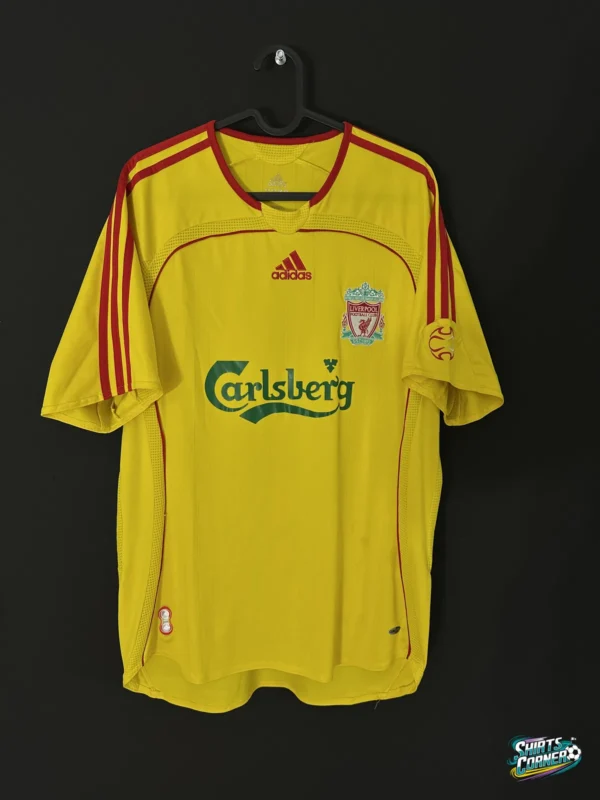 Liverpool FC 2006/07 Away Shirt adidas269 zł
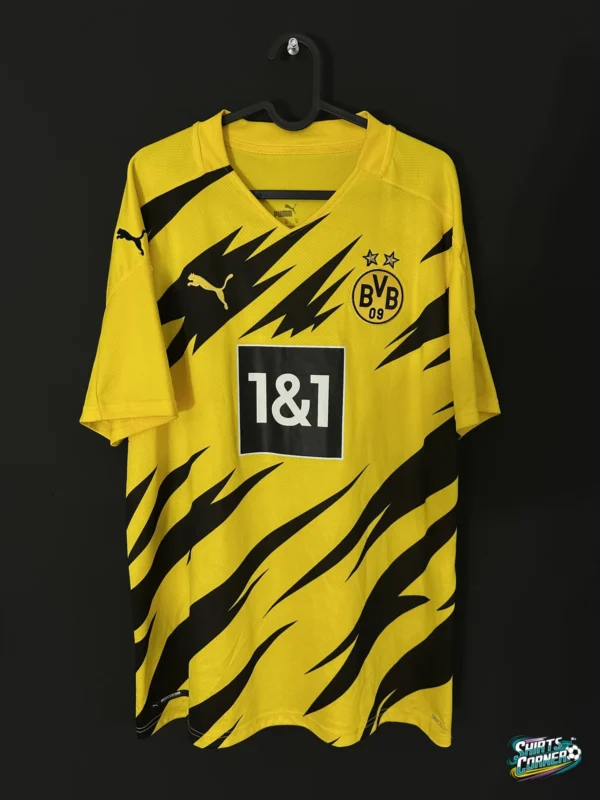 Borussia Dortmund 2020/21 Home Shirt Puma249 zł
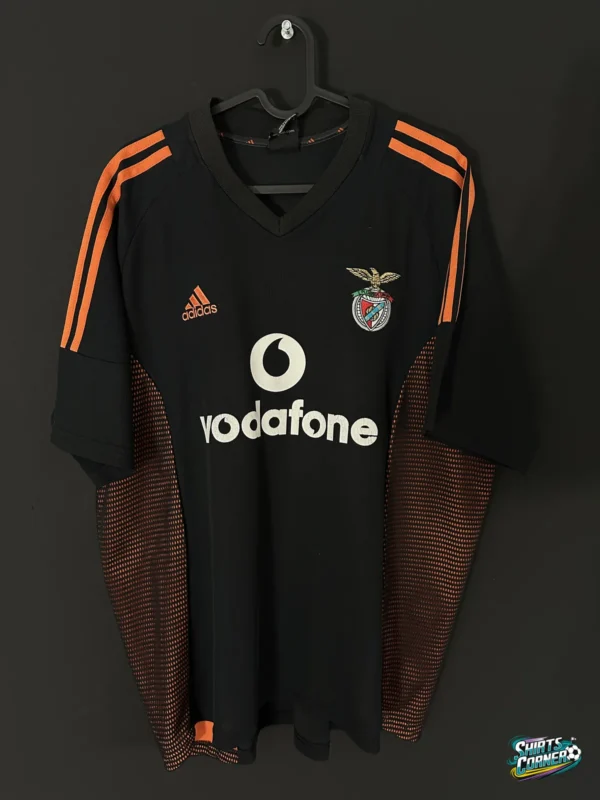 Benfica 2002/03 Away Shirt adidas249 zł
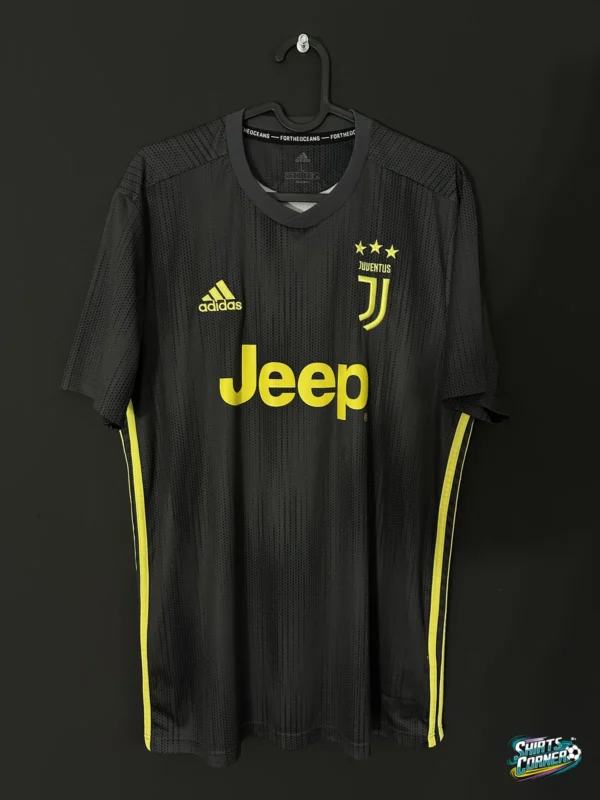 Juventus 2018/19 Third Shirt adidas249 zł
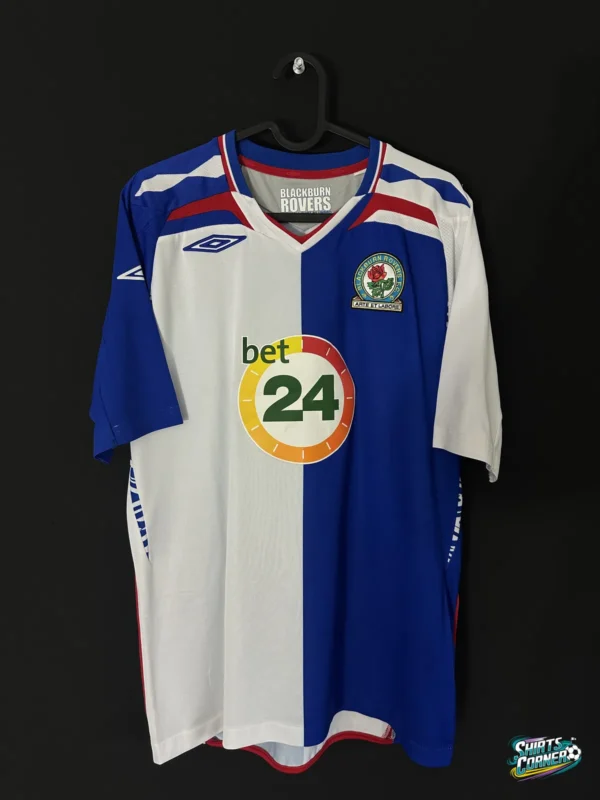 Blackburn Rovers 2007/08 Home Shirt Umbro229 zł
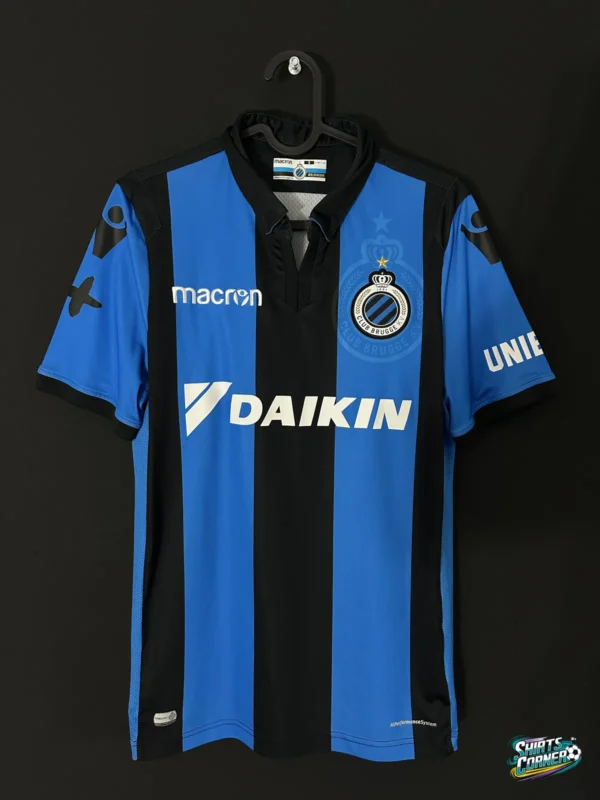 Club Brugge 2018/19 Home Shirt Macron199 zł
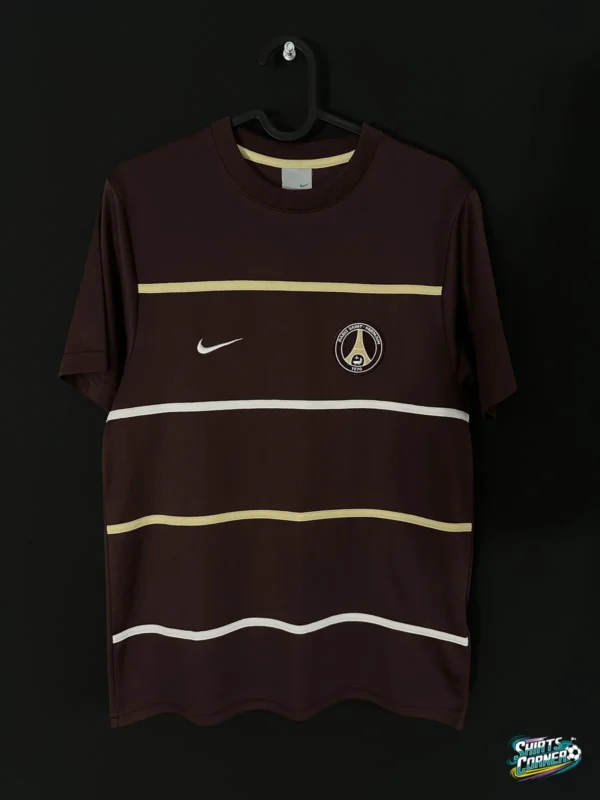 Paris Saint-Germain 2006/07 Training Shirt Nike199 zł
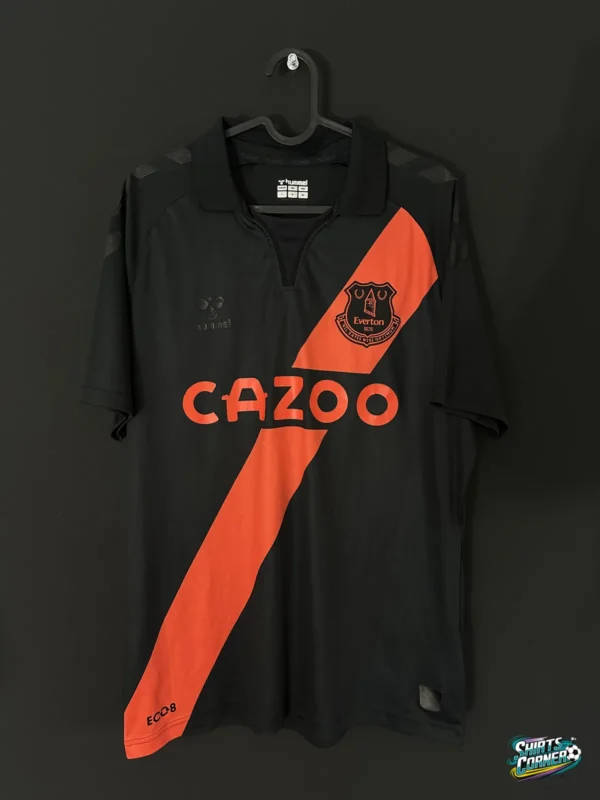 Everton FC 2021/22 Away Shirt hummel179 zł
A ranking of the most beautiful shirts will always be an argument, and that is fine, because that is the point. We are not pretending to have an objective measure. We looked for shirts that meet three conditions: you can recognise the design from the other end of the stadium, there is a real story behind it, and years later people still want to wear it. The result is nine designs from the last ninety years. The order is chronological, not best to worst, because each one wins in a different category. At the end we add a few shirts from our rail that hold their own in this company.
The oldest design on the list and still in play. In 1935 Peru added a horizontal red stripe to its white shirt, and a year later, at the Berlin Olympics, it appeared with a diagonal sash across the chest. It has barely changed it since. The idea reportedly came from school matches, where a diagonal band told the teams apart. One line, two colours, and the kind of recognition other national teams work decades for.
After the defeat by Uruguay at the Maracanã in 1950, Brazil's white shirt became a symbol of disaster. In 1953 the newspaper Correio da Manhã, together with the federation, announced a contest for a new kit in the four colours of the flag. It was won by a young illustrator from Pelotas, Aldyr Garcia Schlee: a yellow shirt with a green collar and cuffs, blue shorts, white socks. Brazil first wore it on 14 March 1954 against Chile. The paradox of the story: Schlee lived near the border with Uruguay and supported the Uruguayans.
The Danes unveiled their shirt for the World Cup in Mexico in February 1986 in Copenhagen and split the fans down the middle, exactly like the design itself. The front was cut into two parts, one in thin stripes and the other plainer, with a thin fabric chosen for the Mexican heat. Hummel wanted to carry the split onto the shorts as well, but FIFA would not allow that. The team was called Danish Dynamite at the time, and years later the shirt came back as a reissue for the brand's centenary.
At Euro 1988 in West Germany the Netherlands walked out in an orange adidas shirt with a geometric pattern that one of the players compared to fish scales. The team wore it only at that tournament, in five matches, and the tournament ended with a win in the final against the Soviet Union and Marco van Basten's famous volley. Few shirts have had such a short career on the pitch and such a long one off it.
The white adidas shirt with a wave of black, red and gold across the chest made its debut at Euro 1988, which West Germany hosted. Two years later it returned for the World Cup in Italy, which the Germans won. A legend says the wave is a chart of the national team's World Cup results, but the design was made earlier, so it is more a good anecdote than the designer's plan.
In England they call it the bruised banana. The yellow adidas away shirt with its black and navy zigzag pattern surprised Arsenal fans so much that at first hardly anyone defended it. Today it is one of the best-known adidas designs of the 1990s, one that designers and later shirts keep coming back to. In its first season Ian Wright scored a hat-trick in it on his league debut against Southampton.
The Mexican brand ABA Sport made a shirt for the World Cup in France with a motif of the Aztec sun stone. The pattern fills the whole front of the shirt. At first some loved it and others could not bear to look at it, but over time it became a cult classic, and its motif keeps returning on later national team shirts. It is one of the first national team shirts to reach so strongly for local history.
Puma dressed Cameroon for the 2002 Africa Cup of Nations in sleeveless shirts, and Cameroon won that tournament. FIFA did not allow the cut at the World Cup in Korea and Japan, so black sleeves were sewn on. One of the boldest attempts to change the form of the shirt itself, not just its pattern.
For the World Cup in Russia Nike went back to the 1994 shirt, from Nigeria's first ever World Cup. A green body in white and green zigzags and black and white sleeves that refer to an eagle's wings, because the team are the Super Eagles. According to reports at the time, Nike collected more than three million orders before the shirt went on sale.
None of them plays it safe, which is why there are no merely decent shirts on this list, even ones in which trophies were won. Many of them caused an argument in their day, and some fans hated them at first. Almost every one says something about the place it came from: Peru's sash, the Aztec calendar, the eagle's wings, the colours of a flag. And almost every one came back later as a reissue, because good designs do not age as fast as the season in which they were worn on the pitch.
How a reissue differs from a shirt from the era is covered by legitcheck.pl in its guide to reissues and repro shirts (in Polish).
The 1988 Dutch shirt is often called a forerunner of the bold designs of the 1990s. There is something to that, because most of our candidates come from exactly that decade or its final seasons. On our rail there are a few shirts that could easily stand next to these nine:
You will find more shirts from that decade in the 90s category, and the whole older part of the rail under retro and vintage.
There is no single answer, because it is a matter of taste. The ones that keep coming back in lists are the Netherlands from Euro 1988, West Germany from 1988 to 1990, Denmark from the 1986 World Cup and Mexico from 1998. What they share is a bold design and a story fans still remember.
Usually when you recognise it without looking at the badge. Iconic shirts combine a striking design with a moment fans remember: a tournament, a goal, a season. They often divide people at first, and only years later does everyone agree they were special.
Until 1950 Brazil played in white. After the defeat by Uruguay at the Maracanã, a contest for a new kit in the colours of the flag was announced in 1953. Aldyr Garcia Schlee won it, and the yellow shirt with green trim made its debut in 1954.
Puma's sleeveless shirt from 2002. Cameroon won the Africa Cup of Nations in it, but for the World Cup FIFA ordered sleeves to be added, and the team played with black sleeves.
That is what the English call Arsenal's away shirt from 1991 to 1993: yellow, with a black and navy zigzag pattern, made by adidas. At first it raised eyebrows; today it is one of the best-known adidas designs of the 1990s.


